William Thomas Beckford, reputed to be the wealthiest commoner in Georgian England, transformed Bath's Lansdown Hill with an extraordinary 154-foot tower that still dominates the skyline today. His fortune, built upon Jamaican sugar plantations and the labour of enslaved people, funded both architectural wonders and a lifestyle of extraordinary excess.
The Boy Who Inherited an Empire
Beckford entered the world on 29 September 1760 at the family's London residence in Soho Square. When his father died in 1770, the ten-year-old inherited not merely wealth but an empire: £1 million in cash, the sprawling Fonthill estate in Wiltshire, several sugar plantations in Jamaica, and approximately 3,000 enslaved human beings. His father, William Beckford senior, had twice served as Lord Mayor of London, and the family name carried both prestige and the heavy shadow of the transatlantic slave trade.
Contemporary estimates placed Beckford's annual income at £100,000, an almost incomprehensible sum for the era. Lord Byron later described him in verse as pre-eminent "in Wit, in Genius, as in Wealth the first." Yet this staggering fortune, which enabled the construction of palaces and the accumulation of artistic masterpieces, was indissolubly linked to the exploitation of enslaved Africans on Caribbean plantations.
The Move to Bath
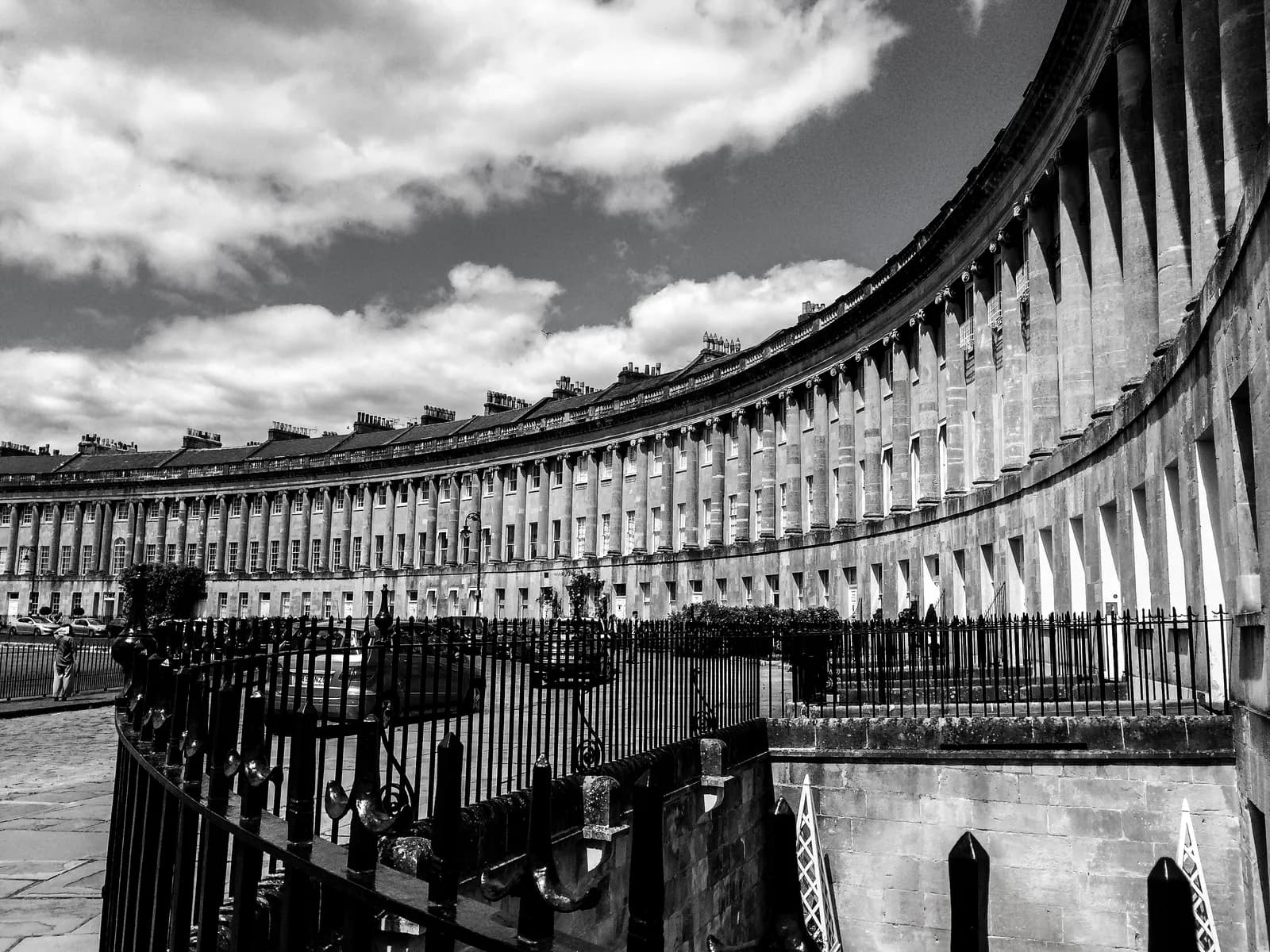
After the collapse of Fonthill Abbey, his Gothic fantasy palace in Wiltshire, Beckford sought refuge in Bath. He arrived in 1822 and promptly established himself in the city's northern reaches, purchasing No. 20 Lansdown Crescent and No. 1 Lansdown Place West. These properties he joined with a one-storey arch, creating a unified residence. By 1836, he had expanded his holdings to include Nos. 18 and 19 Lansdown Crescent.
Beckford's daily routine became legendary. He would ride up to his tower to survey the progress of his gardens and construction works, then walk back down to Lansdown Crescent for breakfast. This mile-long route, which he named Beckford's Ride, connected his home to his tower through a series of interlinked gardens including terraced Italianate plantings, conifer plantations, quarry gardens, and a dyke garden.
The Tower Rises
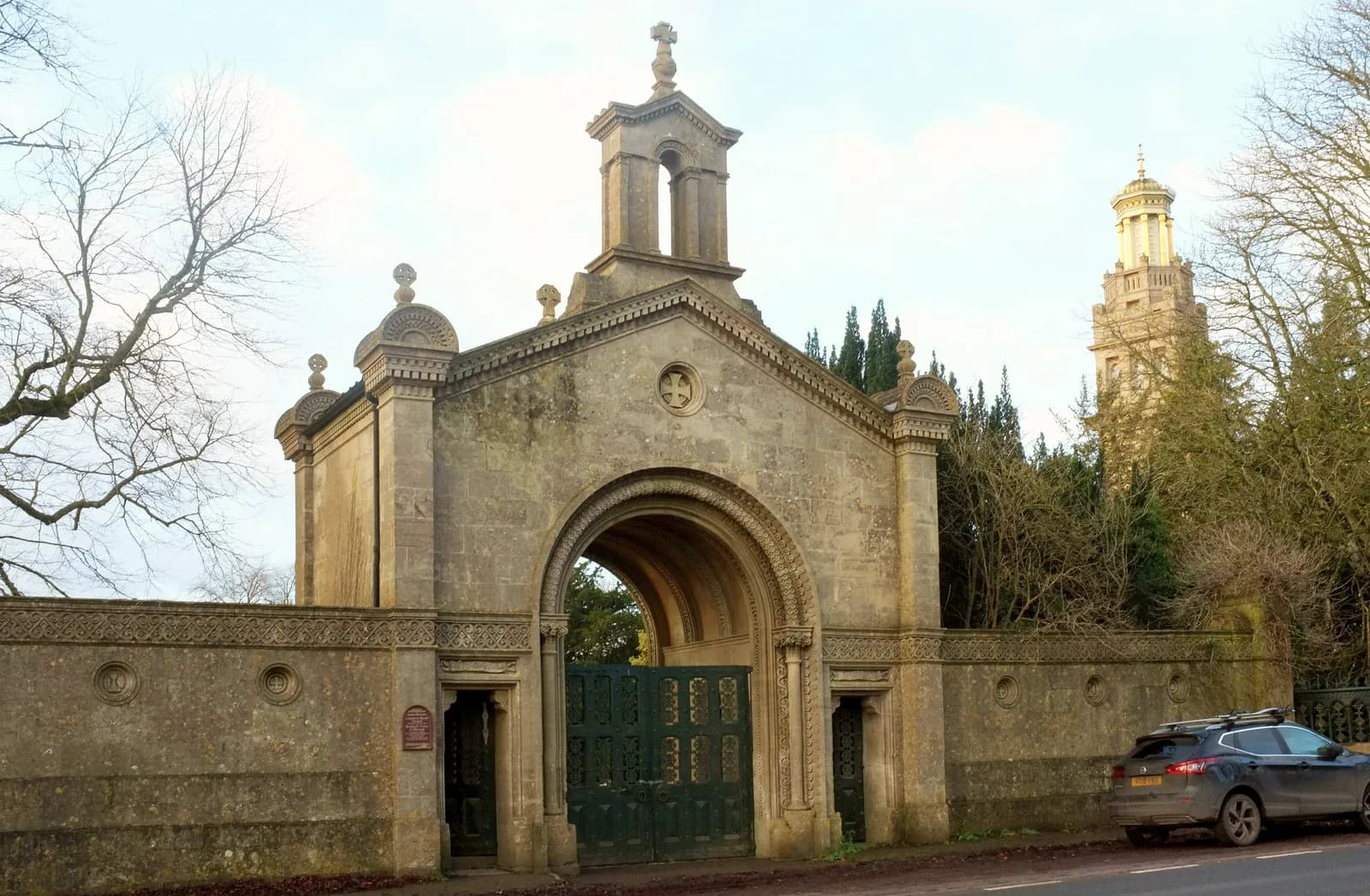
Between 1826 and 1827, Bath architect Henry Goodridge oversaw the construction of what would become known as Beckford's Tower, Lansdown Tower, or simply Beckford's Folly. Rising 154 feet (47 metres) above Lansdown Hill, the structure combined neo-classical severity with Italianate flourishes.
The design drew inspiration from antiquity: the peripteral temple at Tivoli and the Tower of the Winds in Athens both influenced its form. The tower comprised three distinct stages: a square base with Doric entablature, a middle stage featuring recessed arches, and an octagonal belvedere topped with a gilded lantern. A stone spiral cantilevered staircase led upward, followed by 53 wooden steps to the cupola.
Beckford himself was characteristically self-deprecating about his creation. He described it as "such as it is, it is a famous landmark for drunken farmers on their way home from market," adding that he wished it were forty feet higher. The cupola served as a belvedere, offering views across the Somerset countryside and, with a strong spyglass, as far as the Bristol Channel.
Inside the Folly
The tower functioned as both library and retreat, housing Beckford's choicest artworks, books, prints, and rich furnishings salvaged from Fonthill Abbey. The interior reflected its owner's eclectic tastes and devotional temperament.
The ground floor contained an Italianate building with a Scarlet Drawing Room and vestibule. The first floor featured a Crimson Drawing Room, sanctuary, and library. One long narrow room served as an oratory, fitted with devotional paintings and a marble Virgin and Child illuminated by hidden skylights. A furnace and pump at the base circulated warm air through the structure, an early example of central heating.
Some contents were sold during a two-day auction in 1841, but Beckford refurnished the rooms. The tower remained his sanctuary until his death on 2 May 1844 at Lansdown Crescent, aged 83. He was initially interred at Bath Abbey Cemetery, though his remains were later moved near the tower in accordance with his wishes.
From Private Sanctuary to Public Heritage
Following Beckford's death, the tower passed through various hands. His daughter Susan Hamilton, Duchess of Hamilton, donated land adjacent to the tower in 1848 to create Lansdown Cemetery, which was consecrated by Walcot parish. The cemetery closed to new burials in 1992.
Beckford's tomb stands nearby: a massive sarcophagus of polished pink granite adorned with bronze armorial plaques, perched on a hillock surrounded by an oval ditch and ha-ha. The inscriptions reflect his literary sensibilities. One, drawn from his novel Vathek, reads: "Enjoying humbly the most precious gift of heaven to man – Hope." Another, from his poem A Prayer, pleads: "Eternal Power! Grant me, through obvious clouds one transient gleam Of thy bright essence in my dying hour."
The tower received Grade I listed status on 11 August 1972, with the surrounding Lansdown Cemetery and grounds achieving Grade II listing on 30 April 1987. Today, Bath Preservation Trust owns the structure, whilst the Beckford Tower Trust (registered charity number 272986) manages it as a museum.
Confronting a Complicated Legacy
Beckford's story cannot be separated from the source of his wealth. In 1835, following the Slavery Abolition Act 1833, he received £12,803 in compensation, approximately £1.3 million in today's values, for the 1,860 enslaved people he was forced to free. The museum acknowledges this explicitly: its collection includes objects purchased with proceeds derived from the transatlantic slave trade.
Contemporary displays have been developed through extensive consultation with diverse sections of the local community. The approach neither sanitises nor caricatures Beckford, instead presenting the full complexity of a man whose aesthetic achievements were inextricably bound to systems of human exploitation.
A New Chapter: The 2024 Restoration
After years on Historic England's Heritage at Risk Register, Beckford's Tower reopened on 29 June 2024 following a £3.9 million refurbishment. The National Lottery Heritage Fund provided £3 million of this total, with additional support from other funders.
The restoration represented more than mere conservation. Hidden grottos were excavated and opened to visitors for the first time. New accessible interpretation spaces were created. Solar panels and air source heat pumps were installed, reflecting contemporary concerns for sustainability. The project removed the tower from the Heritage at Risk Register whilst fundamentally reinterpreting Beckford's legacy for modern audiences.
The ground floor now serves a dual purpose: museum space by day, holiday accommodation managed by the Landmark Trust by night. This practical reuse helps fund ongoing preservation whilst allowing visitors to experience something of Beckford's seclusion.
Visiting Today
Beckford's Tower stands as a peculiar monument to Georgian excess, literary ambition, and the uncomfortable truths of empire. Its position on Lansdown Hill offers visitors the same sweeping views that captivated its creator, whilst the museum within confronts the full scope of his complicated legacy.
For Bath residents and visitors alike, the tower represents both an architectural curiosity and a lens through which to examine the city's entanglement with colonial wealth. The restored interiors, excavated grottos, and carefully contextualised displays invite a more nuanced understanding of how beauty and exploitation so often walked hand in hand through Georgian England.
The tower is open to the public, with access to the belvedere offering those spectacular views Beckford himself once enjoyed. His daily ride may be lost to history, but his folly endures, a gilded question mark against the Bath skyline.