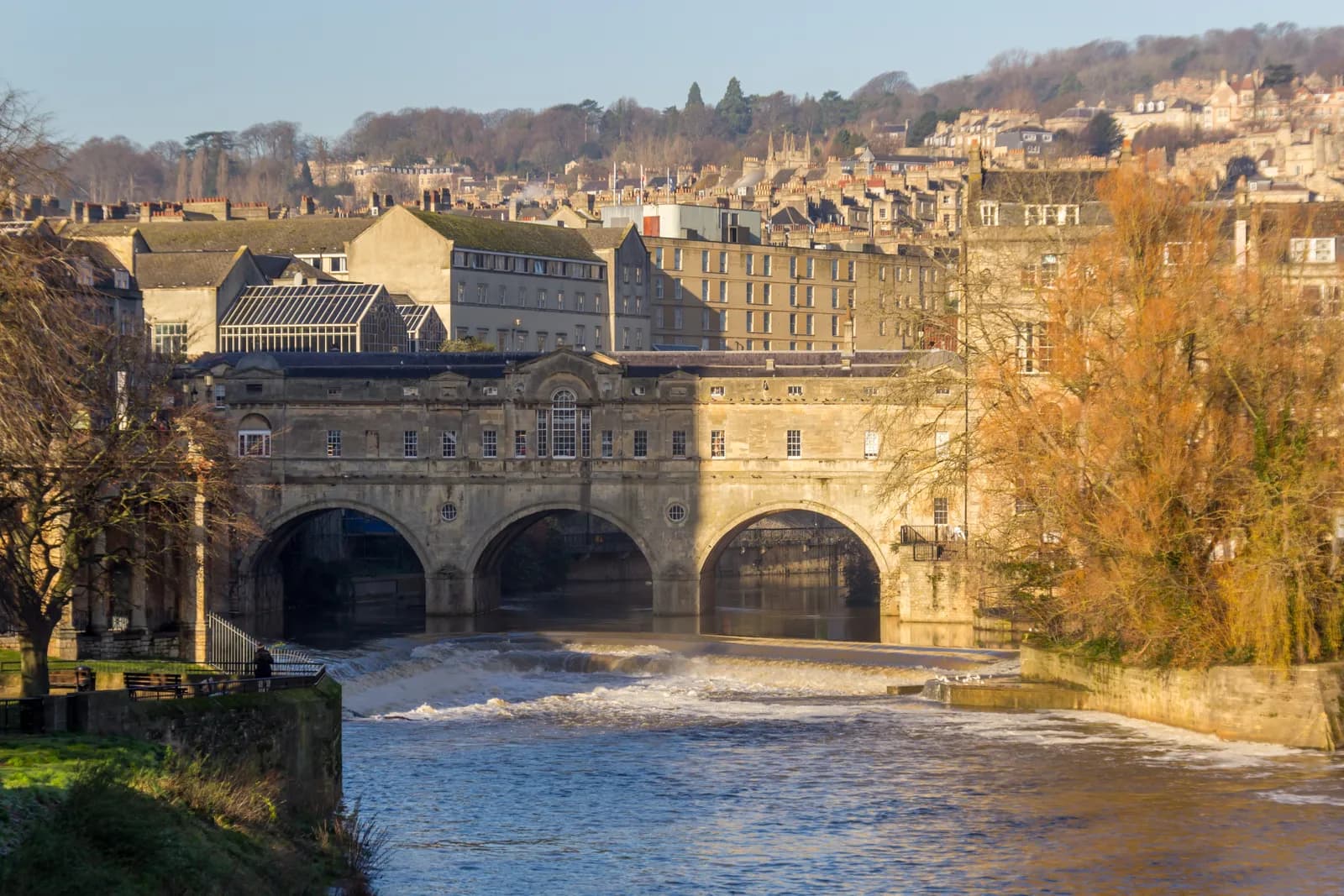
Pulteney Bridge stands as one of only four bridges worldwide to carry shops across its full span on both sides. Completed in 1774, this remarkable structure crosses the River Avon in Bath and remains both a working thoroughfare and a destination for visitors seeking a unique shopping experience.
Robert Adam's Palladian Masterpiece
The bridge was designed by the renowned Scottish architect Robert Adam in the Palladian style. Construction began in 1769 and was completed by 1774, connecting the city centre with the Bathwick estate across the river. Adam's original drawings are preserved in the Sir John Soane's Museum in London, a testament to the bridge's architectural significance. The structure was designated as a Grade I listed building in 1955, recognising its national importance.
The Pulteney Family Connection
The bridge takes its name from the Pulteney family, whose land holdings in Bathwick made a river crossing commercially necessary. William Pulteney, a wealthy businessman and MP, purchased the Bathwick estate in 1727. The bridge enabled development of the land beyond the river and facilitated the growth of Georgian Bath. The structure replaced a ferry service and fundamentally altered the city's geography, allowing Bath to expand eastward.
Shops on the Span
What distinguishes Pulteney Bridge from most river crossings is the presence of shops lining both sides of its entire length. The shop buildings were constructed by Singers and Lankeshere, though the structures have been altered significantly over the centuries. Today, visitors can browse a variety of businesses whilst crossing the river, creating a rare experience of commerce integrated with infrastructure.
The bridge continues to serve practical transport purposes, carrying buses, taxis, cyclists, and pedestrians between the city centre and the eastern side of Bath. This dual function as both working bridge and shopping arcade makes it unusual amongst the world's historic bridges.
Bath's World Heritage Status
Pulteney Bridge forms part of the City of Bath UNESCO World Heritage Site, inscribed in 1987. The site, covering 2,900 hectares, was recognised under cultural criteria for its Roman remains, Georgian architecture, and status as a spa town. In 2021, Bath was additionally added to the transnational World Heritage Site "Great Spa Towns of Europe," further cementing its international significance.
The bridge contributes to Bath's distinctive cityscape, photographed daily by thousands of visitors who come to capture its reflection in the River Avon below. Its position near the historic Bath Weir creates one of the most photographed views in the city.
An Elite Group of Four
Pulteney Bridge belongs to a select group of only four bridges worldwide that support shops across their full span on both sides. This rarity places Bath's bridge alongside other historic structures in an exclusive architectural category. The distinction reflects both the bridge's practical origins in Georgian commerce and its continued relevance as a functioning retail space in the twenty-first century.
For residents and visitors alike, crossing Pulteney Bridge offers a moment of connection with Bath's architectural heritage. The structure demonstrates how Georgian Bath's commercial ambitions were married with aesthetic ideals, creating infrastructure that remains distinctive nearly two and a half centuries after its completion.