The Making of a Georgian Visionary
Ralph Allen arrived in Bath in 1710 as a seventeen-year-old clerk from Cornwall. Within two years, he had become Postmaster of Bath at the age of nineteen; a position that would form the foundation of a fortune that transformed the city forever.
Allen's postal reforms were revolutionary. At twenty-seven, he secured a contract to manage the Cross and Bye Posts across the South West, eventually expanding coverage to the Anglo-Scottish border and South Wales. His "signed for" delivery system eliminated fraud, whilst direct routing rather than channelling everything through London saved the General Post Office an estimated £1,500,000 over forty years.
The Stone That Built a City
Allen's postal wealth funded his greater vision: the systematic extraction of Bath stone. He acquired quarries at Combe Down and Bathampton Down, where Middle Jurassic oolitic limestone lay in vast quantities. This honey-coloured freestone could be sawn in any direction, making it ideal for the crisp classical façades that would define Georgian architecture.
To transport stone from Combe Down to the Kennet and Avon Canal at Bath Locks, Allen commissioned a wooden wagon-way down what is now Ralph Allen Drive. An engraving from 1752 by Anthony Walker depicting Prior Park and this railway is the earliest known railway print. The route remains a busy road connecting Combe Down to the city centre.
Prior Park: A Palladian Showcase
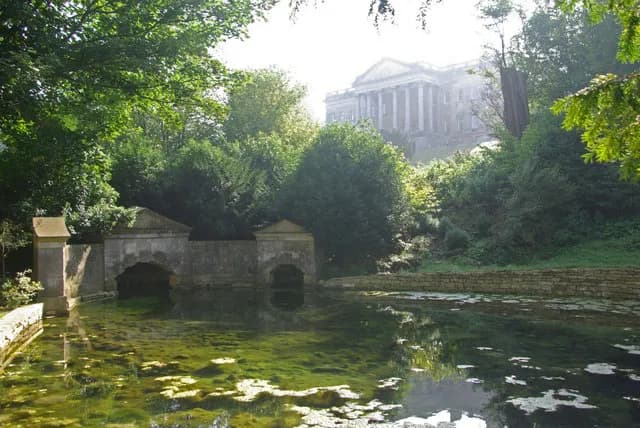
In 1734, Allen commissioned architect John Wood the Elder to design a mansion that would demonstrate Bath stone's potential. Allen's stated aim was "to see all Bath, and for all Bath to see." The resulting Prior Park, constructed between 1734 and 1743, stands as one of the finest Palladian houses in England.
The mansion features a central block of fifteen bays flanked by wings of seventeen bays each. A disagreement during construction led to Wood's dismissal; his clerk of works, Richard Jones, completed the east wing with modifications. The estate's Palladian bridge, one of only four such structures worldwide, was also built by Jones and now holds Grade I listed status.
The landscape gardens were laid out by poet Alexander Pope, who planted over 55,000 trees in 1737. Lancelot "Capability" Brown contributed further designs in the 1750s and 1760s. The National Trust has owned the twenty-eight-acre garden since 1993.
Collaboration with John Wood
Allen's partnership with John Wood the Elder extended beyond Prior Park. Wood specified stone blocks with crisp, clean edges for his classical façades; a departure from the rough-hewn rubble of earlier construction. This requirement drove demand for Allen's quarries.
Wood designed numerous Bath landmarks using Allen's stone, including Queen Square, North and South Parades, The Circus, and the Royal Mineral Water Hospital. Allen's townhouse on North Parade, built from 1727, may also be Wood's work; though some architectural historians suggest Richard Boyle, 3rd Earl of Burlington, as the possible designer.
Literary Connections
Allen's circle included the most celebrated writers of the age. Poet Alexander Pope helped design Prior Park's gardens. Novelist Henry Fielding, author of "The History of Tom Jones, a Foundling," drew upon Allen's character for Squire Allworthy; Fielding's 1749 masterpiece features a benevolent gentleman modelled directly on the Bath postmaster.
Allen supported Fielding financially and, upon the writer's death, provided for the education of his children. Fielding had earlier mentioned Allen obliquely in "Joseph Andrews" (1742), citing him alongside John Kyrle as an example of charitable gentlemanhood.
Civic Life and Philanthropy
Allen served as Mayor of Bath in 1742 and as Member of Parliament for Bath from 1757 until his death in 1764. His charitable giving was extensive. He donated both funds and stone for the Royal National Hospital for Rheumatic Diseases, completed in 1738 and designed by Wood.
He purchased Claverton Manor in 1758 and commissioned a summer home at 2 Trinity Road, Weymouth, where Georgian buildings constructed with his stone still line the harbour. A commemorative plaque marks the Weymouth property.
Legacy in Modern Bath
Ralph Allen died on 29 June 1764 and was buried beneath a pyramid-topped tomb in Claverton churchyard. His marble bust, once housed at the Mineral Water Hospital, was relocated to the hospital's new building at Combe Park in 2019.
His name endures throughout the city. Ralph Allen School opened in Combe Down in 1958. The Ralph Allen CornerStone, opened in 2013, houses the Combe Down Heritage Society archives. Prior Park itself is now Prior Park College, an independent school for pupils aged eleven to eighteen, with a boarding house named Allen House.
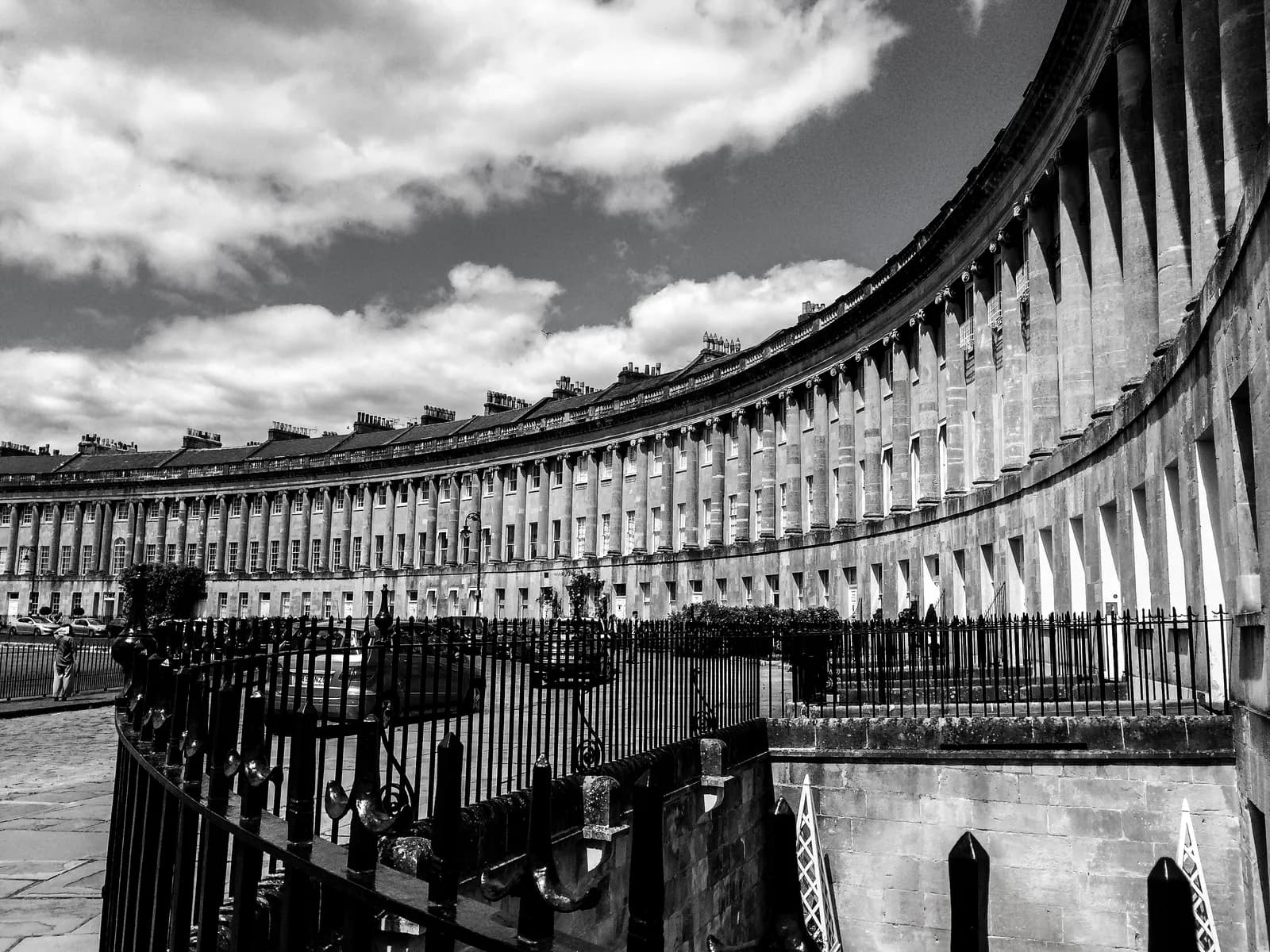
Most significantly, the honey-coloured stone that Allen quarried continues to define Bath's architectural character. From the Royal Crescent to the Circus, from Queen Square to Prior Park, the material that built Georgian Bath remains inseparable from the name of the Cornish postmaster who recognised its potential.